Best Books of 2024
Each year, I keep a "best of" list with the books I've enjoyed and recommend the most. Here's the 2024 list in the order I read them. Lists from previous years are here.
Digital Minimalism: Choosing a Focused Life in a Noisy World
By Cal Newport
Cal Newport offers strategies to make our relationship with digital devices more intentional. Digital Minimalism directly and indirectly inspired changes to my use of technology that I've kept up pretty consistently throughout the year.
24/6: The Power of Unplugging One Day a Week
By Tiffany Shlain
Similar to Digital Minimalism, 24/6 suggests realistic ways to reduce the amount of time we spend with screens and meaningful alternative ways to utilize the time.
You Look Like a Thing and I Love You: How Artificial Intelligence Works and Why It's Making the World a Weirder Place
By Janelle Shane
Through funny metaphors and real-life examples, Janelle Shane explains the inner workings and shortcomings of various technologies under the AI umbrella. No technical background necessary to follow along.
Atlas of AI: Power, Politics, and the Planetary Costs of Artificial Intelligence
By Kate Crawford
Kate Crawford breaks down the politics and power dynamics that go into creating various AI systems, including:
- the environmental and economic impacts of extracting materials (usually from the Global South) to create hardware to run AI-based technology
- the sources data, often from the most vulnerable members of society, used to train AI models
- the underpaid, highly surveilled behind-the-scenes human labor required to label data used to train AI models
- the power and politics of classification that lead to these labels
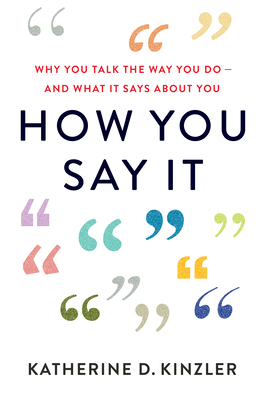
How You Say It: Why We Judge Others by the Way They Talk--And the Costs of This Hidden Bias
By Katherine D. Kinzler
Katherine Kinzler demonstrates how our brains are hard-wired to categorize people by their accents (more inherently than biases such as race and gender, which we learn through socialization) and the impacts of this hidden bias with no legal protections.
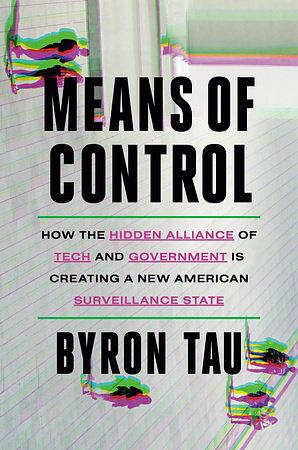
Means of Control: How the Hidden Alliance of Tech and Government is Creating a New American Surveillance State
Byron Tau explores the evolution of national security, data brokerage, and surveillance for profit over the last few decades, leading to the circumvention of the 4th Amendment by distinguishing "seized" data from "purchased" data.
By Byron Tau
Humble Pi: When Math Goes Wrong in the Real World
By Matt Parker
In Humble Pi, Matt Parker uses humor and case studies to show the ways mathematical mistakes lead to real-world consequences.

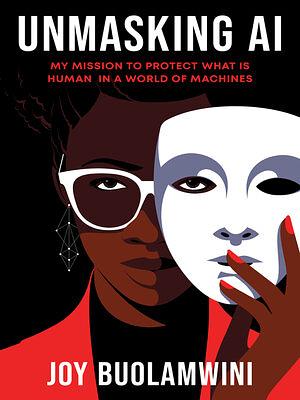
Unmasking AI: My Mission to Protect What Is Human in a World of Machines
Dr. Joy Buolamwini tells the story of her journey into the world of AI research to illuminate the ways these technologies reinforce societal biases and power structures when left unchecked.
By Dr. Joy Buolamwini
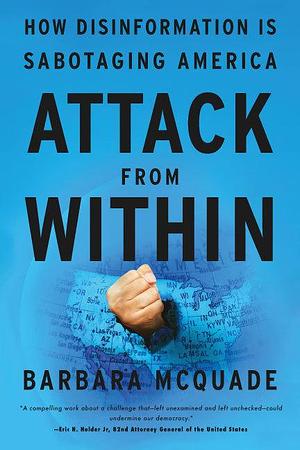
Attack from Within: How Disinformation is Sabotaging America
By Barbara McQuade
Barbara McQuade traces the ways disinformation has been used by past and present authoritarians to alter the perception of reality and seize power.
Thinking in Bets: Making Smarter Decisions When You Don't Have All the Facts
By Annie Duke
Thinking in Bets frames decision-making as an exercise in probabilities. We can never be 100% certain of a given outcome, so sometimes the best decisions lead to bad results and vice-versa. Rather than reveling in the clarity of hindsight, we must embrace uncertainty and make the best decisions we can with the information available to us at the time.
AI Snake Oil: What Artificial Intelligence Can Do, What It Can't, and How to Tell the Difference
By Sayash Kapoor and Arvind Narayanan
This is my new favorite AI book. Sayash Kapoor and Arvind Narayanan break down the realities and limitations of various AI technologies to help readers cut through the hype and understand what is actually possible. No technical background is necessary to follow this book.
Your Face Belongs to Us: A Secretive Startup's Quest to End Privacy As We Know It
By Kashmir Hill
Kashmir Hill documents the creation and rise of Clearview AI, a secretive company that provides facial recognition to search for faces against its database of over 30 billion images scraped from the internet.
Border Hacker: A Tale of Treachery, Trafficking, and Two Friends on the Run
By Levi Vonk and Axel Kirschner
Anthropologist Levi Vonk joins migrants in caravans and shelters on the dangerous journey from Guatemala to Mexico to the United States. Along the way, Levi befriends Axel Kirschner, who was born in Guatemala, brought to the U.S. as a young child by his mother, and eventually deported back to Guatemala after a minor traffic incident where he is not at fault. After arriving in Guatemala, he discovers his birth records have been destroyed and no country has a record of his existence. He and Levi attempt to navigate the hostile immigration system to reunite Axel with his wife and young children.